
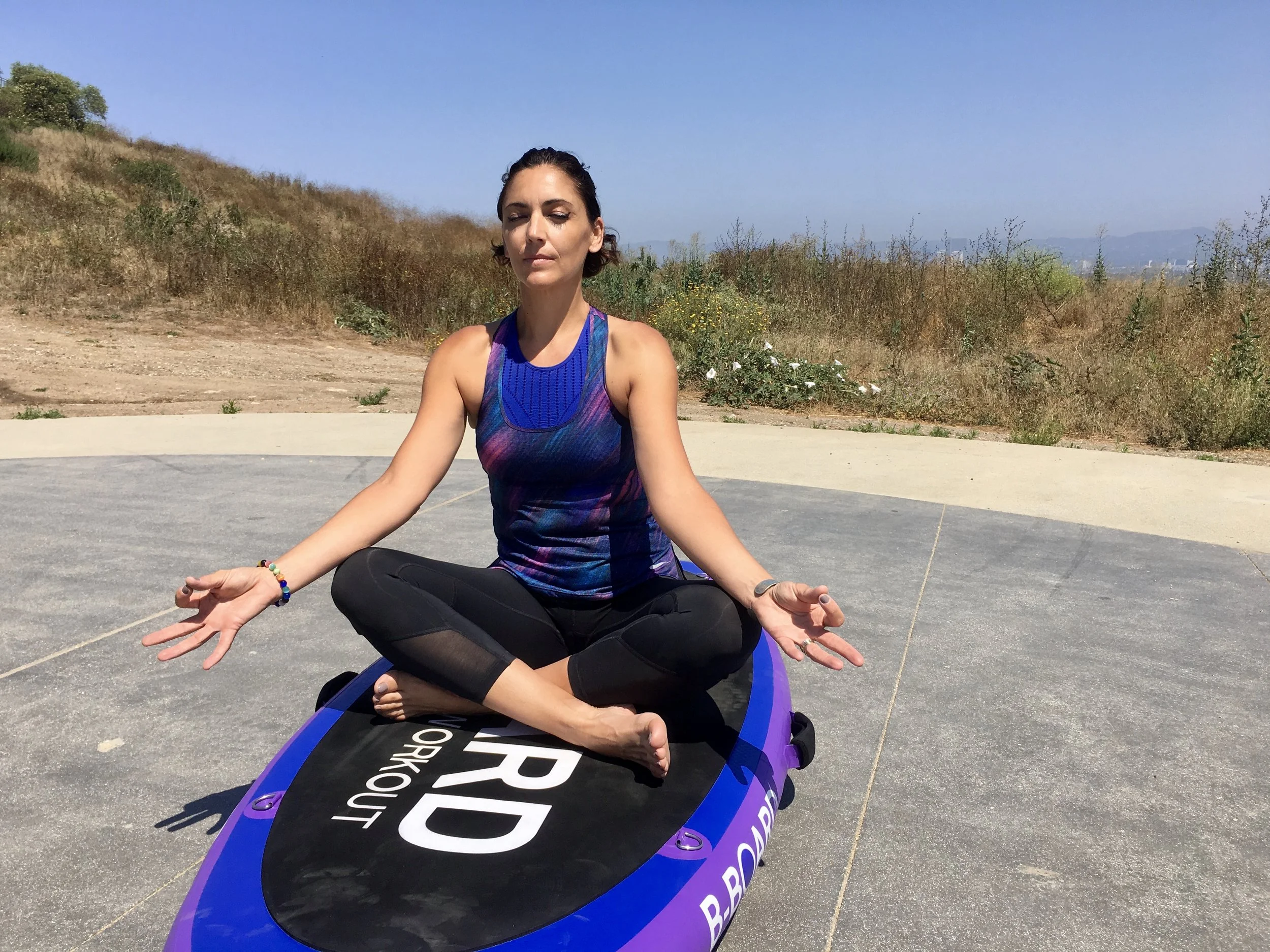
When you think about balance exercises, you may picture stronger ankles, better coordination or a more stable core. But a balance-focused workout can also give you an opportunity to slow down, pay attention to your body and enjoy learning something new.
Whether you practice simple movements on the floor, explore a balance board workout or join a guided class, balance training can bring a different kind of attention to your exercise routine.
So, what are the mental health benefits of balance exercises, and what does the research actually support?
How balance exercises fit into a well-being routine
The World Health Organization recognizes that regular physical activity can improve well-being and reduce symptoms of anxiety and depression. Balance exercises can be one part of that active lifestyle.
The evidence for exercise overall is stronger than the evidence that balance training alone improves mental health. The ideas below describe opportunities for mindful movement and enjoyment, alongside research on balance-related confidence.
1. Practice focusing on the present moment
Try a supported single-leg stance or a slow, controlled weight shift. Your attention moves toward the task: where your weight is, how you are standing and what adjustment you need to make next.
This gives you something specific to focus on during your workout. If your mind wanders, you can return your attention to your feet, posture and movement.
In this way, balance practice can be used as an exercise in present-moment attention. That does not mean it will remove worries, but it may offer a welcome change from a busy day of multitasking.
2. Become more aware of how you move
Balance exercises invite you to notice small details: pressure through your feet, tension in your shoulders or the difference between rushing and moving with control.
You can build this awareness by choosing a manageable exercise and asking yourself:
Am I breathing comfortably?
Can I soften unnecessary tension?
Can I make the movement smaller and more controlled?
These are simple ways to bring mindful attention into exercise without needing a complicated routine.
3. Build confidence through gradual progress
There is something satisfying about becoming more comfortable with a movement that once felt unfamiliar.
Progress might mean relying less on support, moving more smoothly or feeling ready to try a new variation. These small achievements can provide a sense of accomplishment.
Research supports a specific form of confidence: a randomized trial in older adults with osteoporosis found that a progressive balance program improved fall-related self-efficacy, or confidence about managing activities without falling. This finding relates specifically to confidence with daily activities in that population.
The practical approach is to choose achievable challenges and recognize your progress.
4. Make exercise feel more enjoyable
An enjoyable workout gives you a reason to return.
Balance training adds variety to familiar movements. A controlled squat, a gentle reach or a simple yoga position becomes a new task when balance is part of the exercise.
For some people, that element of exploration makes a session feel more engaging. You can focus on learning a skill and noticing progress, with room for a smile when a movement takes a little practice.
The challenge should feel manageable. More instability is not automatically more beneficial.
5. Create opportunities for connection
A guided balance class also offers a shared experience.
Participants can encourage one another, celebrate progress and enjoy trying something new together. For someone who prefers exercising with others, that social setting may be a valuable part of the session.
An instructor can also help adapt the exercises so each person has an appropriate challenge and a clear place to begin.
What about balance training and brain health?
Brain health and mental health are related, but research on one does not automatically establish benefits for the other.
In a small randomized study of 40 healthy adults, 12 weeks of balance training improved memory and spatial cognition compared with relaxation training. However, the groups did not differ in their change in psychological distress.
The findings are encouraging for certain thinking skills, while also showing why claims about treating anxiety or depression require separate evidence.
Start with simple, controlled movements
You do not need a balance board to begin.
Start on a firm, level floor beside a sturdy support. Explore slow weight shifts or a supported single-leg stance, keeping your eyes open and breathing normally. Choose a challenge that lets you maintain control.
A few minutes can be a practical starting point for building a habit.
If you want more movement ideas, explore our balance board exercises for balance, core strength and stability. Introduce unstable equipment gradually, with qualified guidance where needed.
Explore mindful movement on land or water
At LEVEL FITNESS, balance is part of the way we approach movement.
B-BOARD® brings balance training onto an inflatable fitness platform used on land, indoors or outdoors. Alongside more energetic workouts, it can be used for yoga, Pilates, stretching and mindful movement.
AQUA STAND UP® brings that exploration onto a floating board in a swimming pool, with guided sessions that can include controlled movement, yoga and stretching. Outdoor sessions suit warmer conditions, while indoor pools can offer opportunities throughout the year.
Both experiences offer ways to explore balance and body awareness, with movements adapted to the setting and the participant.
Interested in adding balance to your routine? Explore personal training with Eric in Santa Monica and the Los Angeles area, with sessions adapted to your goals, experience and confidence.
Balance exercises can complement a well-being routine, but they do not replace mental health care.
