
Balance Board Exercises: 10 Moves for Balance, Core Strength & Stability
Balance training doesn't have to mean simply standing on one leg.
Adding an unstable surface to familiar exercises changes the way your body responds to movement. Instead of relying only on the muscles performing the exercise, your body must continuously adjust to maintain control and stability.
That's what makes a balance board workout so different.
From squats and lunges to planks and push-ups, balance board exercises can add a new challenge to familiar movements while developing balance, coordination, core engagement and body awareness.
Here are 10 exercises you can incorporate into a balance-focused workout.
Prefer to Follow a Complete Balance Board Workout?
Put these principles into practice with this 20-minute balance board workout using B-BOARD®. The session combines balance, core control and stability through purposeful instability.
What Is a Balance Board Workout?
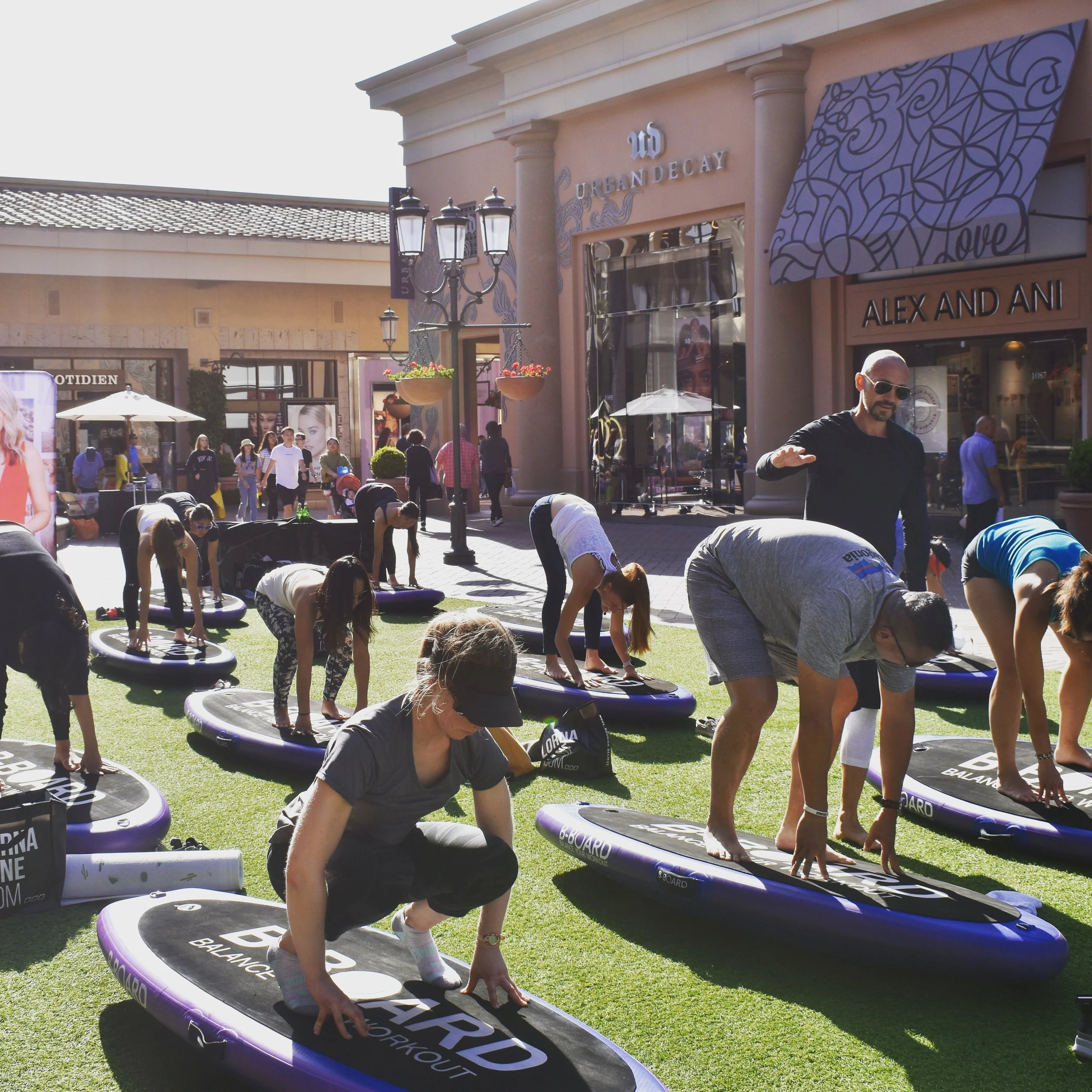
A balance board creates an unstable surface underneath your body.
As the surface moves, your body continuously makes small adjustments to maintain position and control. This challenges your ability to stabilize during both static positions and dynamic exercises.
Balance board training can be incorporated into functional training, strength workouts, mobility work, yoga and full-body fitness.
And you don't need to start with complicated movements.
Learning to control the instability is the first exercise.
1. Balance Hold
Targets: Balance • Core • Legs • Coordination
Start by standing on the board with your feet comfortably apart.
Keep your knees slightly bent, your posture tall and your core engaged. Focus your eyes on a fixed point in front of you and try to maintain a controlled position as the board moves beneath you.
Beginner tip: Position yourself near a stable surface that you can reach if necessary.
Try: 20–30 seconds.
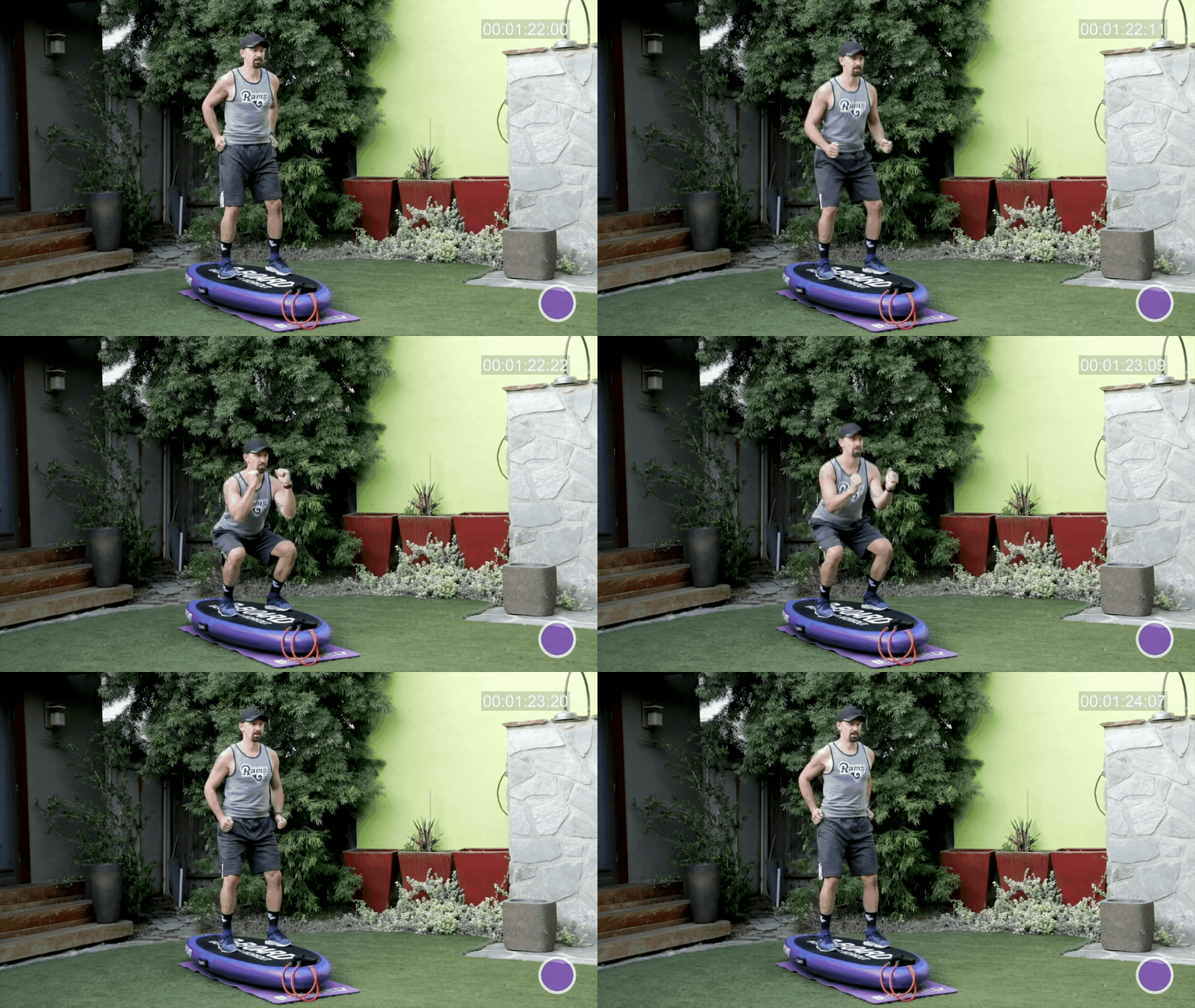
2. Balance Board Squat
Targets: Quads • Glutes • Hamstrings • Core
Stand tall with your feet comfortably positioned on the board.
Keeping your chest lifted, bend your knees and hips to lower into a squat while maintaining control of the board.
Push through your feet to return to standing.
The unstable surface adds another dimension to a familiar squat because your body must control both the exercise and the movement underneath you.
Try: 8–12 controlled repetitions.
3. Reverse Lunge
Targets: Legs • Glutes • Balance • Coordination
Begin standing on the board.
Step one foot backward into a reverse lunge while keeping the other foot on the board.
Lower with control, then push through the front leg to return to your starting position.
Alternate sides.
Beginner option: Reduce the depth of the lunge and focus on maintaining control before increasing your range of motion.
Try: 6–10 repetitions per side.
4. Squat to Overhead Press
Targets: Legs • Shoulders • Core • Full-body coordination
Once you're comfortable performing a squat, add an upper-body movement.
Hold a light dumbbell in each hand. Lower into your squat, then return to standing and press the weights overhead.
The goal isn't simply to lift the weights. Try to maintain control of the board throughout the entire movement.
Try: 8–10 repetitions.
5. Push-Up
Targets: Chest • Shoulders • Triceps • Core
Place your hands on the board slightly wider than shoulder width and extend your legs into a plank position.
Keeping your body aligned, lower your chest toward the board and push back to the starting position.
Because your hands are positioned on an unstable surface, your upper body and core must continuously work to maintain control.
Beginner option: Perform the exercise from your knees while maintaining a straight line from your knees through your hips and shoulders.
Try: 6–12 repetitions with control.
6. Plank
Targets: Core • Shoulders • Full-body stability
Place your forearms or hands on the board and extend your legs behind you.
Keep your shoulders, hips and heels aligned while maintaining tension through your core.
Instead of trying to eliminate every movement of the board, focus on controlling your body's response to it.
Try: 20–45 seconds.
7. Mountain Climbers
Targets: Core • Shoulders • Cardio • Coordination
Begin in a plank position with your hands supported on the board.
Bring one knee toward your chest, return it and alternate legs.
Start slowly.
Once you can maintain good control, gradually increase your rhythm without sacrificing your position.
Try: 20–30 seconds.
8. Dead Bug
Targets: Core • Coordination • Body control
Balance training doesn't always have to be performed standing.
Lie on your back on the board with your hips and knees bent and your arms extended toward the ceiling.
Slowly extend the opposite arm and leg while maintaining control through your core, then return to the starting position and alternate sides.
The goal is slow, deliberate movement rather than speed.
Try: 6–10 repetitions per side.
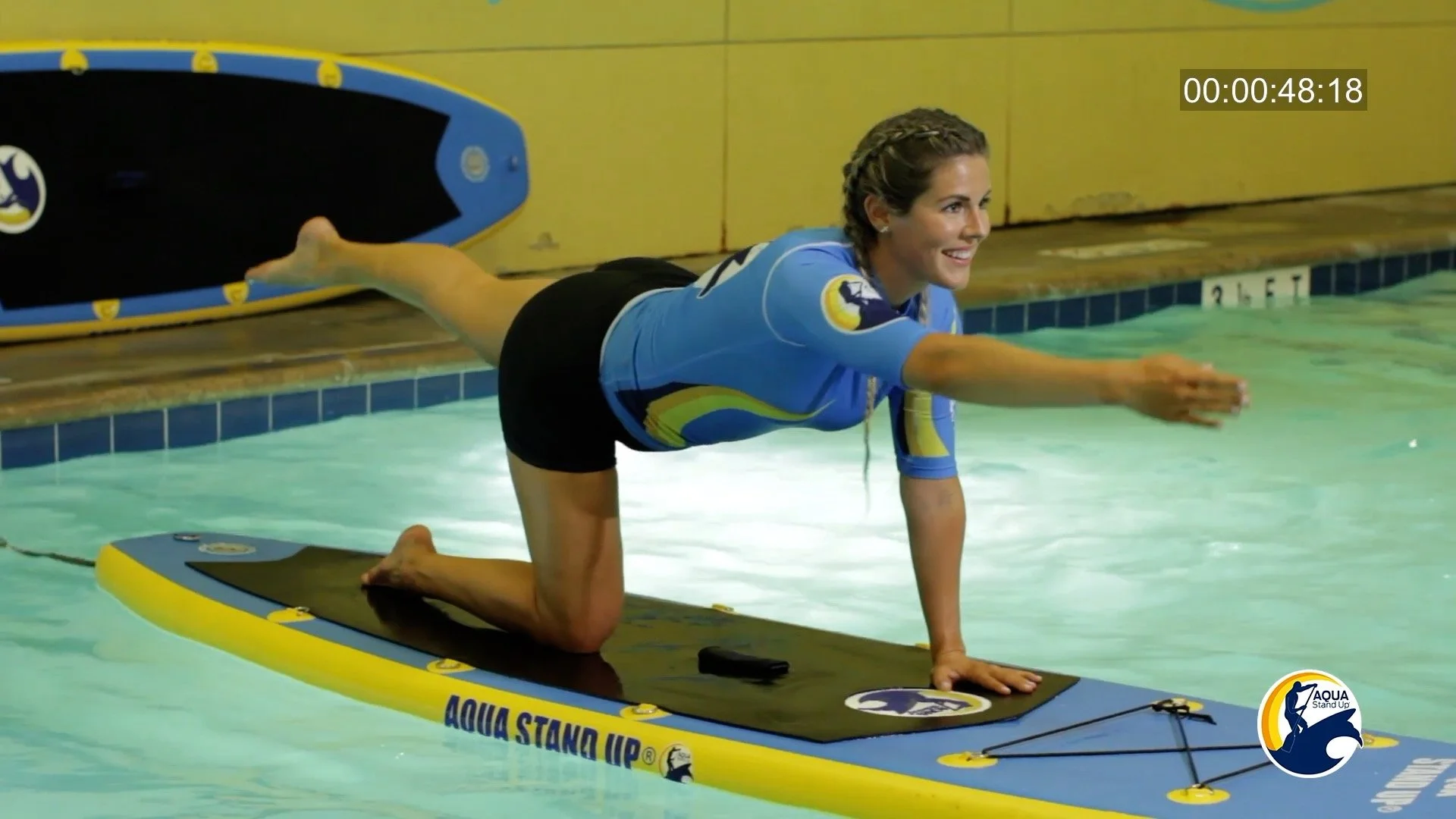
9. Bird Dog
Targets: Core • Back • Glutes • Coordination
Begin on your hands and knees on the board.
Extend one arm forward while extending the opposite leg behind you.
Pause while maintaining control, return to the starting position and switch sides.
The combination of instability and opposite arm-leg movement makes this an excellent exercise for coordination and body awareness.
Try: 6–10 repetitions per side.
10. Yoga Balance Hold
Targets: Balance • Mobility • Focus • Core
Balance boards can also be incorporated into slower, mindful movement.
Try a controlled yoga-inspired position such as a Warrior variation while maintaining your connection with the unstable surface.
Move slowly, breathe naturally and focus on control rather than trying to make the board perfectly still.
Try: Hold for 15–30 seconds per side.
How Long Should a Balance Board Workout Be?
You don't need an hour-long workout to introduce instability training.
Beginners can start by adding 5–10 minutes of balance exercises to an existing workout.
As your control and confidence improve, you can combine several exercises into a complete balance board workout.
For example:
Balance Hold → Squat → Reverse Lunge → Push-Up → Plank
Perform each exercise with control, rest as needed and repeat the sequence according to your fitness level.
Quality of movement is more important than speed.
Is Balance Board Training Good for Beginners?
Yes, but progression matters.
If you're new to instability training, begin with simple positions and movements and stay near a stable support.
Develop control before adding speed, resistance or more complex exercises.
The objective isn't to fight the instability. It's to teach your body how to respond to it.
A Different Approach to Balance Board Fitness
B-BOARD® inflatable balance board takes a different approach to balance board fitness.
Its inflatable base creates a responsive unstable surface large enough to explore much more than standing exercises.
Functional training, strength, cardio, yoga, Pilates and mindful movement can all be incorporated into the same balance-based training environment.
That means a squat is no longer just a squat.
A plank is no longer just a plank.
Every exercise includes another challenge:
Control the movement beneath you.

Take Instability Training to the Water
Instability training doesn't have to stop on land.
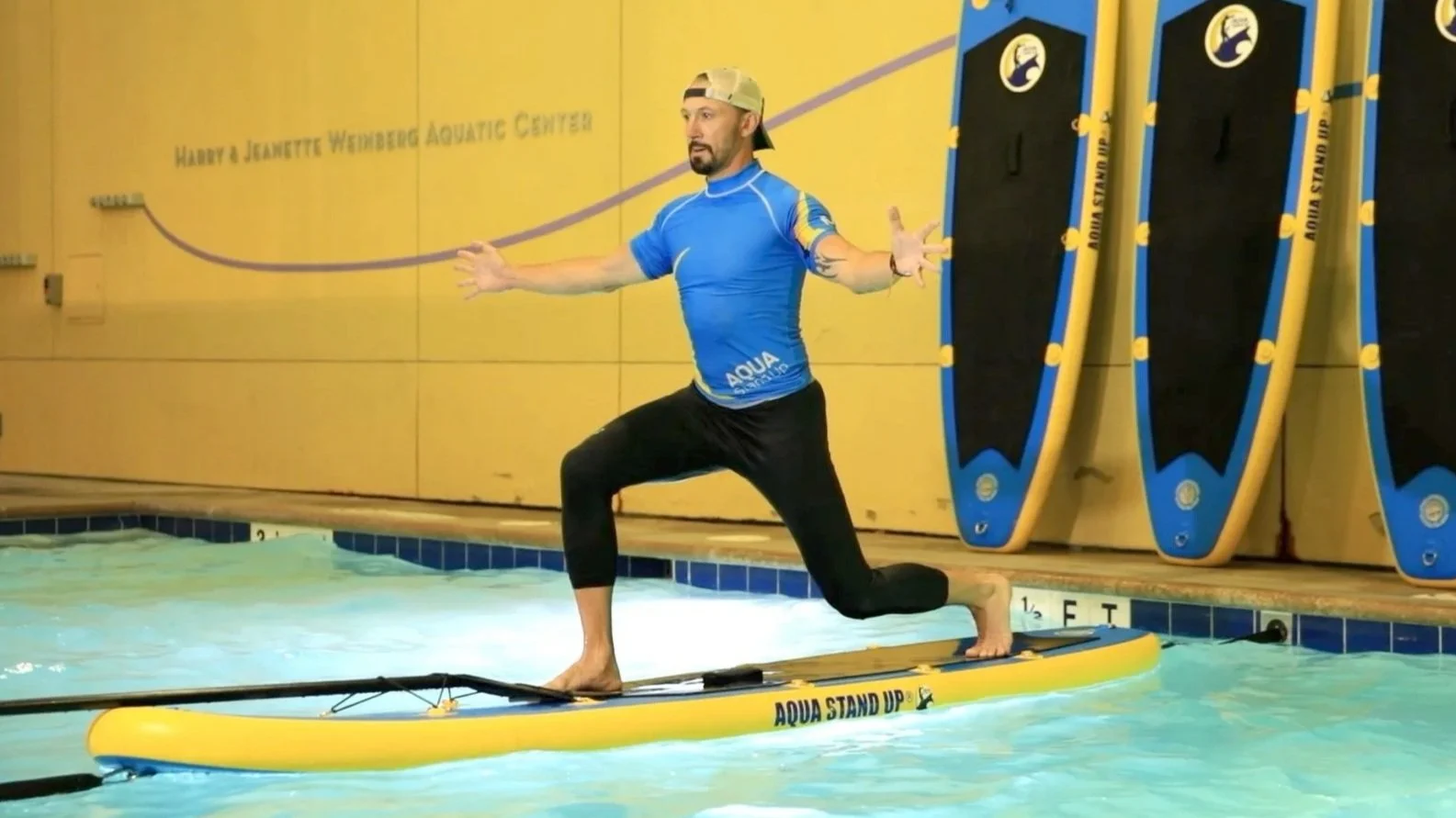
AQUA STAND UP® applies the same principle in an aquatic environment, where a floating board responds continuously to the movement of both your body and the water.
The result is an entirely different balance experience incorporating fitness, core training, yoga, Pilates and mindful movement.
Ready to Experience Balance Training Differently?
Whether you want to train on land with B-BOARD® or take instability training to the water with AQUA STAND UP®, LEVEL FITNESS offers two unique ways to challenge balance, core strength, coordination and control.
New to balance training? Start with these balance exercises you can do at home.
