
Balance board training is an effective way to introduce instability into your fitness routine, challenging your balance, coordination, core engagement, and body awareness.
Whether you're looking to improve functional strength, complement your yoga or Pilates practice, or bring more variety to your home workouts, incorporating a balance board can create new challenges for your body.
At LEVEL FITNESS, we've taken this concept further with B-BOARD®, an inflatable balance board designed for functional strength, balance training, yoga, Pilates, and full-body workouts.
Created by fitness professional Eric Vandendriessche, B-BOARD® transforms traditional exercises into engaging instability-based workouts that can be practiced at home, indoors or outdoors.
In this article, we'll explore the benefits of balance board training, how it works, and practical ways to incorporate it into your fitness routine.
Understanding the Balance Board
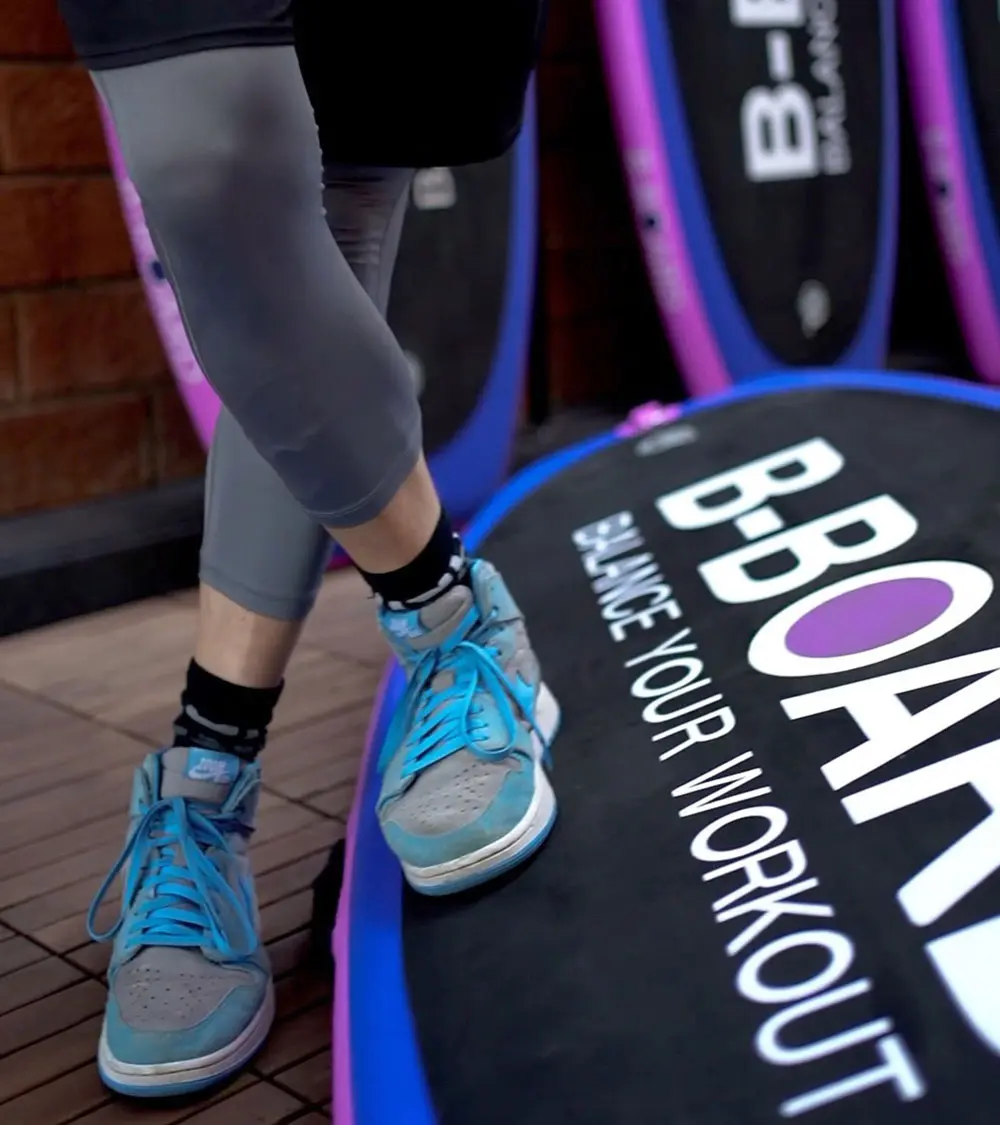
Unlike traditional rigid balance boards, B-BOARD® features an inflatable design with a rounded underside that creates instability during exercise. This allows users to explore a variety of movements, from standing balance exercises and squats to floor-based strength training, yoga, and Pilates.
As the creator of B-BOARD® and AQUA STAND UP®, Eric Vandendriessche developed these programs around the principle of instability training, combining balance, coordination, and functional movement into engaging fitness experiences.
A balance board is a simple yet effective tool designed to improve stability, coordination, and overall body awareness. It's often shaped like a plank that rocks on a curved base, allowing users to engage their muscles dynamically while maintaining balance. Many athletes and fitness enthusiasts swear by it, finding that it offers a unique challenge which traditional gym equipment cannot provide. By standing on a balance board, you force your body to correct itself and stabilize, which is essential for developing core strength.
While the concept may sound basic, the benefits are vast. Using a balance board isn't just about physical strength; it aids in honing your focus and mental stamina too. When you stand on a balance board, your mind is actively engaged in finding equilibrium, which can be incredibly beneficial for those with busy lives. This combination of physical and mental exercise makes it a vital addition to your fitness toolbox.
Balance boards are also used in certain rehabilitation and movement-training programs to help develop balance, coordination, and body awareness. However, individuals recovering from an injury should seek guidance from a qualified healthcare professional before introducing instability exercises into their routine.
Benefits of Using a Balance Board
The benefits of using a balance board are abundant and multi-faceted. To begin with, one of the primary advantages is improved core strength. Engaging the muscles in your abdomen and lower back helps build a more robust foundation, making everyday activities easier. As you strengthen your core, you'll find that activities, from lifting groceries to playing sports, become more manageable.
Additionally, balance boards enhance stability and coordination. This is particularly valuable for athletes or anyone involved in activities that require quick changes in direction or movement. Practicing on a balance board can improve your agility, making you not only a better athlete but also reducing the risk of falls and injuries in your daily life.
Beyond physical benefits, balance boards can bring a refreshing change to your routine. They inject an element of play and fun into workouts that can often feel monotonous. Instead of the same old repetitive exercises, a balance board prompts creativity in your workout regime, keeping you engaged and motivated to push your limits.
Moreover, using a balance board also helps enhance proprioception – your body’s awareness of its position in space. This heightened sense can significantly improve performance in various sports, as athletes need to accurately gauge their movements. Whether you’re hiking on uneven terrain or sprinting on a track, a well-developed sense of balance makes a noticeable difference.
How a Balance Board Improves Core Strength
Core strength is the backbone of almost all physical activity, and a balance board effectively targets the core muscles like no other equipment can. As you stand on the board, your body subconsciously activates various muscles to keep you stable. This requires more engagement than typical exercises, such as crunches or planks. The result? A more efficient and enjoyable workout.
When using a balance board, every slight move demands a response from your core. Over time, these small adjustments lead to muscle symmetry and greater stability. This benefit is not only aesthetic; it improves athletic performance by ensuring the core can support your body effectively through various movements. Stronger core muscles enhance proper posture, decrease lower back pain, and optimize power during workouts, making them extremely valuable for exercise enthusiasts.
In addition, more engaged core muscles can positively affect the overall workout. When your core is strong, other exercises yield greater results. For instance, exercises like squats or deadlifts can be more effective when you maintain proper core engagement. Thus, your time spent exercising translates into tangible results, maximizing the effort you put in.
Enhancing Balance and Stability with a Balance Board
One of the most significant benefits of using a balance board is the enhancement of balance and stability. With nearly every athletic endeavor, balance is essential. Whether it's skiing, surfing, or even yoga, maintaining equilibrium can make or break performance. The balance board provides practical and engaging exercises that foster greater stability, applicable across various activities.
Utilizing a balance board helps train your body to respond to instability. In the real world, surfaces aren't always level. Whether you're walking on a rocky path or navigating a crowded gym, a solid sense of balance can prevent falls and injuries. Consistent practice on a balance board develops muscle memory, which translates to better performance in unpredictable situations.
Furthermore, this tool is ideal for athletes looking to refine their skills. For example, dancers can benefit from enhanced balance, improving their grace and fluidity. On the other hand, runners may find that developing stability contributes to their speed and power. Ultimately, a balance board equips users with essential skills that can elevate performance and confidence.

Integrating the Balance Board into Your Workout Routine
Incorporating a balance board into your existing workout routine can be both beneficial and enjoyable. It doesn't have to be an overwhelming task; start small by simply replacing your regular warm-up with some balance board exercises. Begin with gentle sways left and right to activate your core, and as you become more comfortable, try more dynamic movements.
Consider using the balance board during bodyweight exercises. For instance, performing squats on a balance board increases the challenge, forcing your body to stabilize while executing the move. Another effective integration is to include the board in yoga sessions, where balance poses can be enhanced. The added instability of the board deepens the workout and challenges your body in a supportive way.
You can also establish a full workout routine centered around the balance board. Create a circuit combining traditional exercises with balance training, like push-ups, lunges, and planks performed on the board. Alternating between exercises not only keeps things interesting but also enhances overall fitness levels, making use of every muscle group while developing coordination.
Safety Tips for Using a Balance Board
While balance boards are generally safe, it’s crucial to ensure you’re using them properly to avoid injuries. Start on a soft surface to mitigate the risk of falling. Ideally, practicing on a carpet or with a yoga mat can provide the necessary cushioning that can help you get accustomed to the board without the fear of slips that may cause harm.
Additionally, make sure you have a good posture when using a balance board. Keep your knees slightly bent and your back straight to prevent strain on your joints. Practicing with proper form not only makes the experience safer but also optimizes the effectiveness of your workout.
Lastly, always listen to your body. If at any point you feel excessive discomfort or instability, step down and take a break. Progress takes time, so gradually increase the difficulty of your exercises. Remember, the goal is to enhance your fitness journey, not to risk injury. Careful practice today leads to better balance and strength tomorrow.
Final Thoughts on the Benefits of Balance Boards
Ready to experience balance board training?
Discover B-BOARD®, our inflatable balance board designed to bring functional strength, balance, yoga, and Pilates workouts into your home.
Explore our B-BOARD® program, shop our balance boards, or book a personal training session with Eric in Los Angeles to experience instability training with professional guidance.
